Burundi 🇧🇮
Republic of Burundi

The flag of Burundi is divided by a white diagonal cross into four alternating triangular areas of red at the top and bottom, and green on the hoist and fly sides. A white circle, with three green-edged red six-pointed stars arranged to form a triangle, is superimposed at the center of the cross.
Location
Quick Facts
Alpha 2
BIAlpha 3
BDINumber
108TLD
.biCapital
GitegaPopulation
11,890,781Area
27,834 km²Landlocked
YesLanguages
Currencies
Drives on
RightWeek starts
MondayTimezones
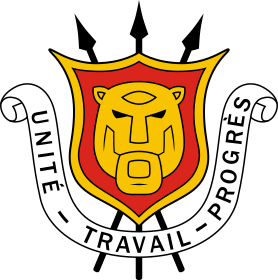
UTC+02:00Coat of Arms
What is the Flag of Burundi?
The flag of Burundi is the national flag of the East African country of Burundi. It features a white saltire which divides the field into alternating red and green sections. Below the saltire is a white disk which contains three red six-pointed stars. The flag was adopted on June 28, 1967.
What does the Burundi Flag Look Like?
The Burundi flag has a rectangular shape and consists of a white saltire which divides the field into four equal sections. The top and bottom sections are red, while the left and right sections are green. Below the saltire is a white disk which contains three red six-pointed stars. The stars represent the three major ethnic groups of the country: the Hutu, the Tutsi, and the Twa. The white saltire is a symbol of peace and unity between the different ethnic groups.
What is the Burundi Flag Called?
The Burundi flag is officially known as the “National Flag of Burundi”. It is sometimes referred to as “the Burundian flag” or “the Burundi flag”.
What Does the Burundi Flag Represent?
The Burundi flag is a symbol of the country’s unity and diversity. The white saltire represents peace and unity between the different ethnic groups. The three red stars represent the three major ethnic groups of the country: the Hutu, the Tutsi, and the Twa. The red and green sections of the flag represent the country’s commitment to democracy and human rights. The flag is also a symbol of hope and progress for the country.
Who Created the Burundian Flag?
The Burundi flag was designed and created in 1967 when the country gained its independence from Belgium. It was designed by a group of Burundian intellectuals, and the colors of the flag are said to have special meanings. The green color represents hope and the red represents the country's bloodshed during its struggle for independence. The white disc in the center of the flag symbolizes peace, unity, and reconciliation between all the different ethnic groups in the country.
The Burundi flag is a horizontal tricolor, with a white disc in the center. The top stripe is red, the bottom stripe is green, and the middle stripe is white. The red stripe is the widest, followed by the white, and then the green stripe. The white disc in the center of the flag is twice the width of the red stripe and has a diameter of half the flag’s length.
The red color on the Burundi flag was chosen to represent the blood shed by those who fought for the country's independence. The green color was chosen to represent hope for the future of the country. The white disc in the center of the flag is said to represent peace, unity, and reconciliation among all the different ethnic groups in Burundi.
The flag of independent Burundi was first flown on July 1, 1967, and has remained unchanged since then. It is a symbol of the country’s struggle for independence and a reminder of the sacrifices made by the Burundian people to gain freedom from Belgian rule.
The flag is designed in the same manner as the flag of Belgium, with the same colors but with the addition of the white disc in the center. This is a sign of the country’s effort to create a unique national identity, and to differentiate itself from its colonial past.
The Burundi flag is an important symbol of the country’s history and a reminder of the unity among the different ethnic groups in the nation. It is a reminder of the struggles to gain independence and the sacrifices made by the people of Burundi. It is a sign of hope for the future of the country and a reminder that peace, unity, and reconciliation are possible for all the people of Burundi.
The Colours of Burundi
Bordering Countries


Similar Flags
Flags that share colours with Burundi