Sweden 🇸🇪
Kingdom of Sweden

The flag of Sweden has a blue field with a large golden-yellow cross that extend to the edges of the field. The vertical part of this cross is offset towards the hoist side.
Location
Quick Facts
Alpha 2
SEAlpha 3
SWENumber
752TLD
.seCapital
StockholmPopulation
10,353,442Area
450,295 km²Languages
Currencies
Drives on
RightWeek starts
MondayTimezones
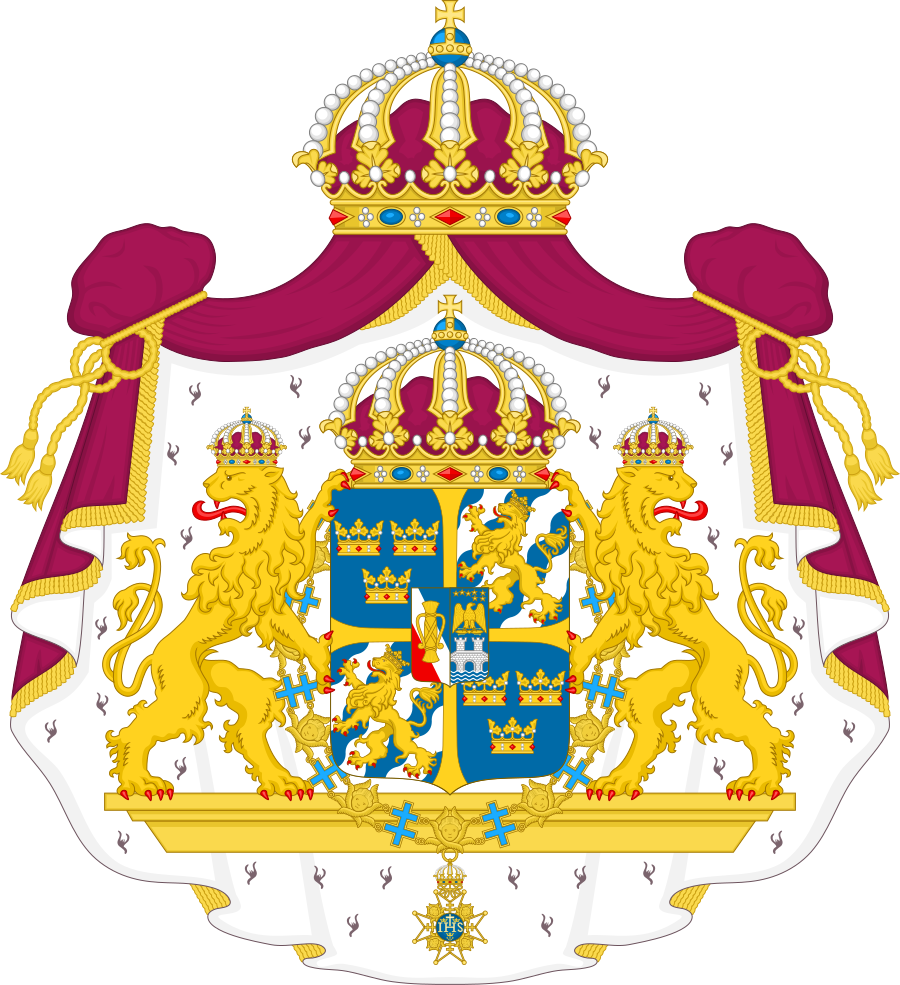
UTC+01:00Coat of Arms
What is the Flag of Sweden?
The flag of Sweden is also known as the Swedish Flag, and is one of the oldest flags in Europe. The current version of the flag was adopted on June 22, 1906, and is a combination of the national colors of Sweden, blue and yellow.
What Does the Sweden Flag Look Like?
The Swedish Flag consists of a yellow, or gold, cross on a blue background. The blue background has a yellow border. The vertical arm of the cross is longer than the horizontal arm. The vertical arm also extends beyond the horizontal arm, creating a triangular shape. The cross is also known as the Scandinavian Cross, and is a symbol of Christianity.
What is the Sweden Flag Called?
The flag of Sweden is known as the Svenska Flagg, which translates to “the Swedish Flag” in English. It is also known as the Scandinavian Cross or the Dannebrog.
What Does the Sweden Flag Represent?
The Swedish Flag represents the unity and freedom of the Swedish nation. The blue of the flag symbolizes loyalty, truth, and justice, while the yellow represents generosity and justice. The blue and yellow colors have been used in Swedish flags since the late 1300s, when they were adopted as the colors of the Swedish Coat of Arms.
The cross on the Swedish Flag symbolizes Christianity, and is also a symbol of the once-united Scandinavian countries. Additionally, it is thought to represent the four seasons, as well as the four elements of earth, air, fire, and water.
Who Created the Swedish Flag?
The modern design of the Swedish flag has remained largely unchanged since it was first adopted in June of 1906. The flag is a design of yellow and blue, featuring a yellow cross with a blue background. It is a simple yet striking design that has become an iconic symbol of Sweden.
The design of the Swedish flag was the work of a man named Olof Rudbeck, also known as Olof Rudbeck the Elder. He was born in 1630 in Stockholm, Sweden and was a scholar, scientist, engineer, and inventor. He was a professor at Uppsala University and is credited with many important contributions to Swedish culture, including the design of the Swedish flag.
Rudbeck's design for the Swedish flag features a yellow cross on a blue background. The blue and yellow colors of the flag are derived from the colors of the Swedish coat of arms. The yellow cross is said to represent the unity between the Swedish people and the cross is also a symbol of Christianity. The blue symbolizes loyalty and justice.
Rudbeck's design of the Swedish flag has been around for centuries and remains a symbol of national pride. It is flown proudly throughout the country and is also used in international recognition, such as the Olympic Games.
The Swedish flag has become an important part of the Swedish national identity and is seen as a sign of national unity and pride. It is flown at public and private buildings and is also used on postage stamps, coins, and other items. The Swedish flag also serves as a reminder of the values that the country stands for and its commitment to justice, equality, and freedom.
In addition to creating the modern design of the Swedish flag, Olof Rudbeck also designed the Swedish coat of arms. This coat of arms is made up of three crowns, which represent the three Scandinavian countries, Sweden, Norway, and Denmark. It also features a lion, which is a symbol of strength and courage.
Today, the Swedish flag is recognized around the world and is seen as a symbol of national pride and unity. It is a reminder of the hard work and dedication of Olof Rudbeck and his commitment to creating a unified Sweden.
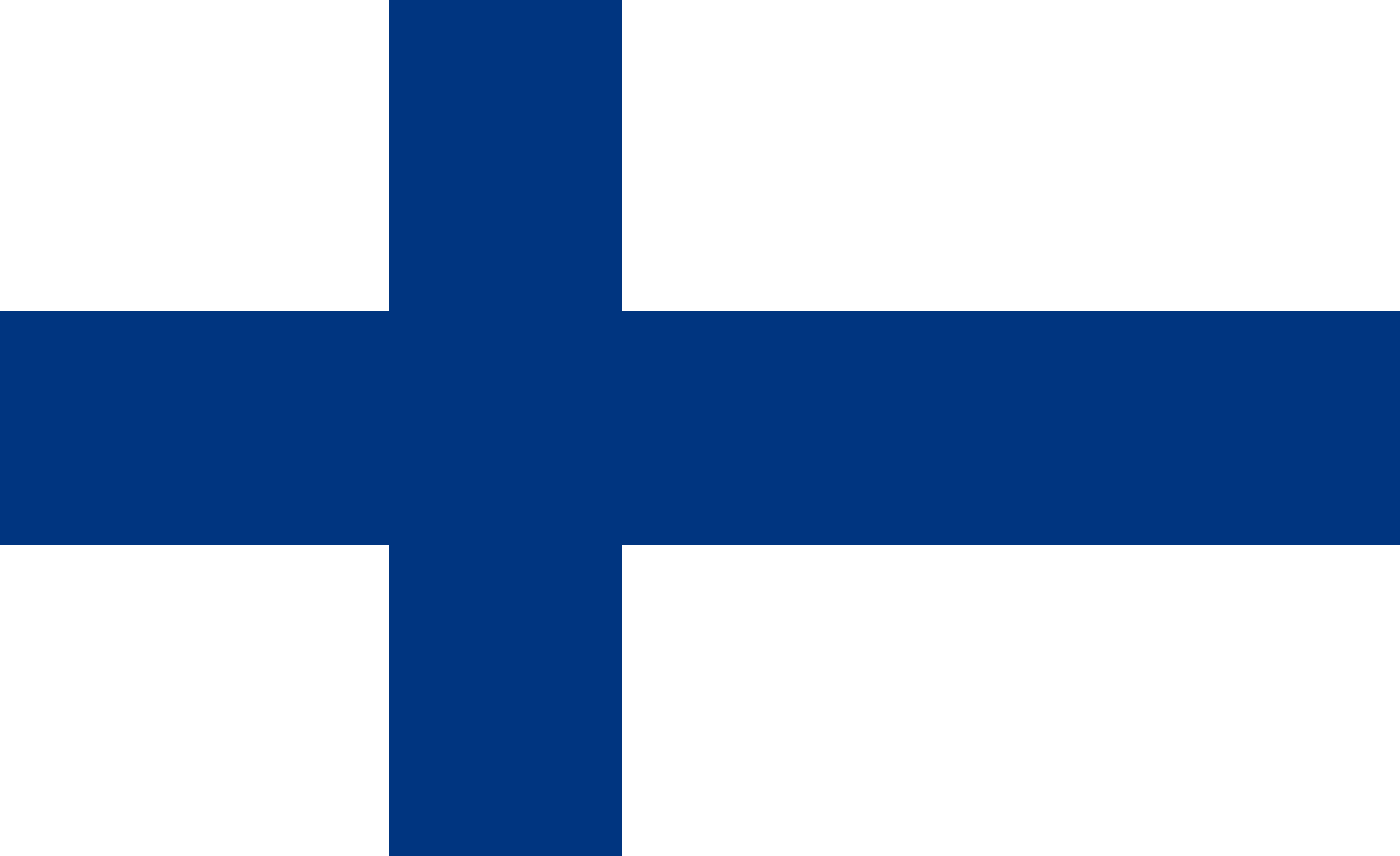

Similar Flags
Flags that share colours with Sweden