Philippines 🇵🇭
Republic of the Philippines

The flag of Philippines is composed of two equal horizontal bands of blue and red, with a white equilateral triangle superimposed on the hoist side of the field. This triangle has its base on the hoist end, spans about two-fifth the width of the field and bears a central golden-yellow sun with eight rays and a five-pointed golden-yellow star at each vertex.
Location
Quick Facts
Alpha 2
PHAlpha 3
PHLNumber
608TLD
.phCapital
ManilaPopulation
109,581,085Area
342,353 km²Languages
Currencies
Drives on
RightWeek starts
MondayTimezones
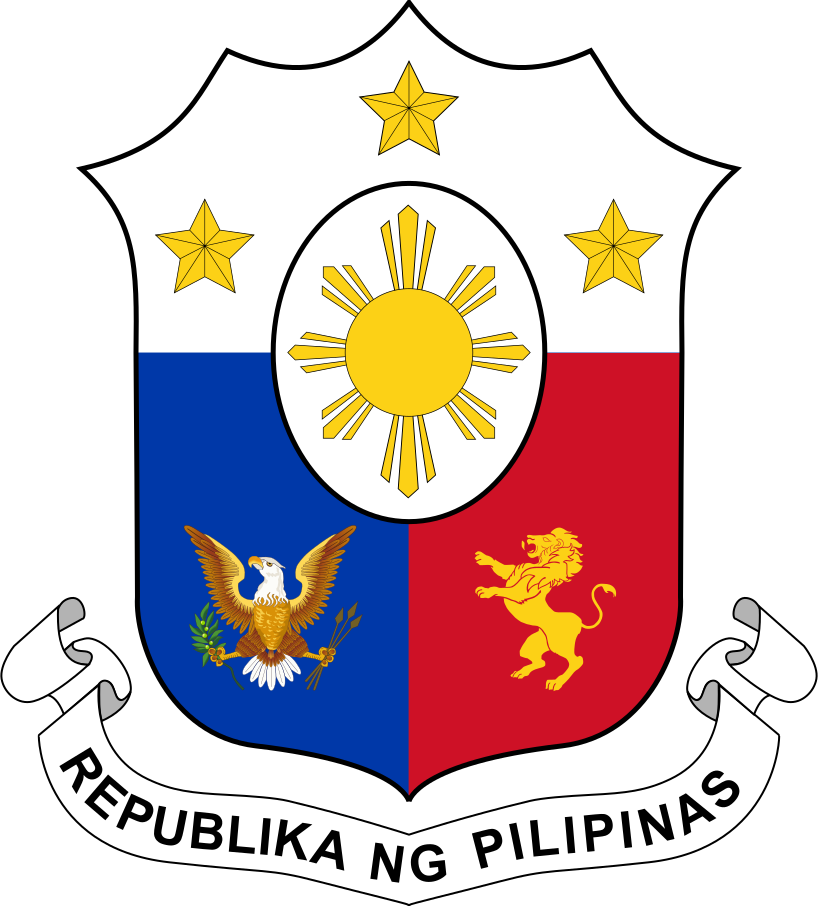
UTC+08:00Coat of Arms
What is the Flag of Philippines?
The flag of Philippines is one of the national symbols of the country, representing its identity and sovereignty around the world. It has a unique design that is recognized and admired by many. The flag was first adopted in 1898, shortly after the Philippine Revolution.
What Does the Philippines Flag Look Like?
The flag of Philippines has a rectangular design, with a royal blue background and a white triangle at the left side. In the middle of the triangle is a golden sun with eight primary rays. A white five-pointed star is also present, located at the center of the sun. The triangle also has three stars, which signify the three geographical areas of the country: Luzon, Visayas, and Mindanao.
What is the Philippines Flag Called?
The official name of the flag of Philippines is the “Flag of the Republic of the Philippines”. The flag is also sometimes referred to as the “Sun and Three Stars”, due to its design elements.
What Does the Philippines Flag Represent?
The flag of Philippines is a symbol of the country’s independence and national pride. The blue background represents the country’s unity, while the white triangle stands for equality. The golden sun signifies freedom, while the eight primary rays stand for the eight provinces that first declared independence from Spain. The three stars stand for the three major island groups of the country: Luzon, Visayas, and Mindanao. The five-pointed star at the center of the sun represents the country’s democratic ideals.
Overall, the flag of Philippines is a symbol of the country’s rich history and its pursuit of freedom and justice. It is a source of pride for many Filipinos, and a reminder of the importance of protecting and preserving the country’s independence.
Who Created the Filipino/Philippine Flag?
The Philippines flag was designed by the great Filipino artist, General Emilio Aguinaldo, in 1898. It was the first official flag to represent the country during the Philippine Revolution, and it has been the national flag of the Philippines ever since.
The current flag of the Philippines is composed of a white triangle on the left side, a blue stripe in the middle, and a red stripe on the right side. The white triangle symbolizes the three major islands of the Philippines, while the blue stripe represents peace, truth, and justice. The red stripe symbolizes the courage and patriotism of the Filipino people. In the center of the flag is a yellow sun with eight rays, which represent the first eight provinces that declared their independence from Spain.
General Emilio Aguinaldo chose the colors for the flag himself, with the intention of representing the ideals of the Filipino people. The blue is said to represent the courage of the Filipinos, the red their patriotism and love for their country, and the yellow the hope and glory of freedom.
The symbolism behind the design of the flag is twofold. On one hand, it is meant to represent the struggle of the Filipino people to gain their independence from Spain, and on the other, to commemorate the spirit of the Filipino people and their desire to remain united and independent.
General Emilio Aguinaldo was also the first president of the Philippines, and the flag was flown at his inauguration in 1898. Since then, the flag has been used to represent the nation in various international events, including the World War II, the Asian Games, and the Olympic Games.
The flag has been changed a few times since its original design. In 1941, the sun was changed to a golden sun with eight rays, and in 1945, the flag was changed to incorporate the colors of the Philippine flag. In 1987, the original sun design was restored, and in 1998, the flag was changed to include a new star representing the country’s freedom.
The flag of the Philippines is an important symbol of the country's independence and unity, and it has become a source of national pride for the Filipino people. It is a symbol of resilience and hope, and it will continue to represent the Filipino people for many generations to come.
Similar Flags
Flags that share colours with Philippines