Haiti 🇭🇹
Republic of Haiti
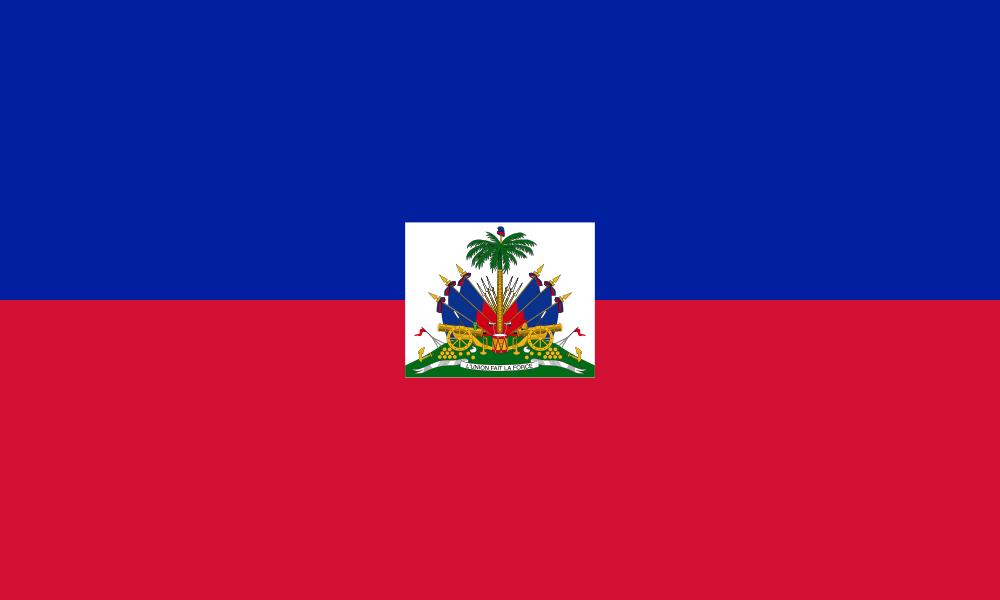
The flag of Haiti is composed of two equal horizontal bands of blue and red. A white square bearing the national coat of arms is superimposed at the center of the field.
Location
Quick Facts
Alpha 2
HTAlpha 3
HTINumber
332TLD
.htCapital
Port-au-PrincePopulation
11,402,533Area
27,750 km²Languages
Currencies
Drives on
RightWeek starts
MondayTimezones
UTC-05:00Coat of Arms
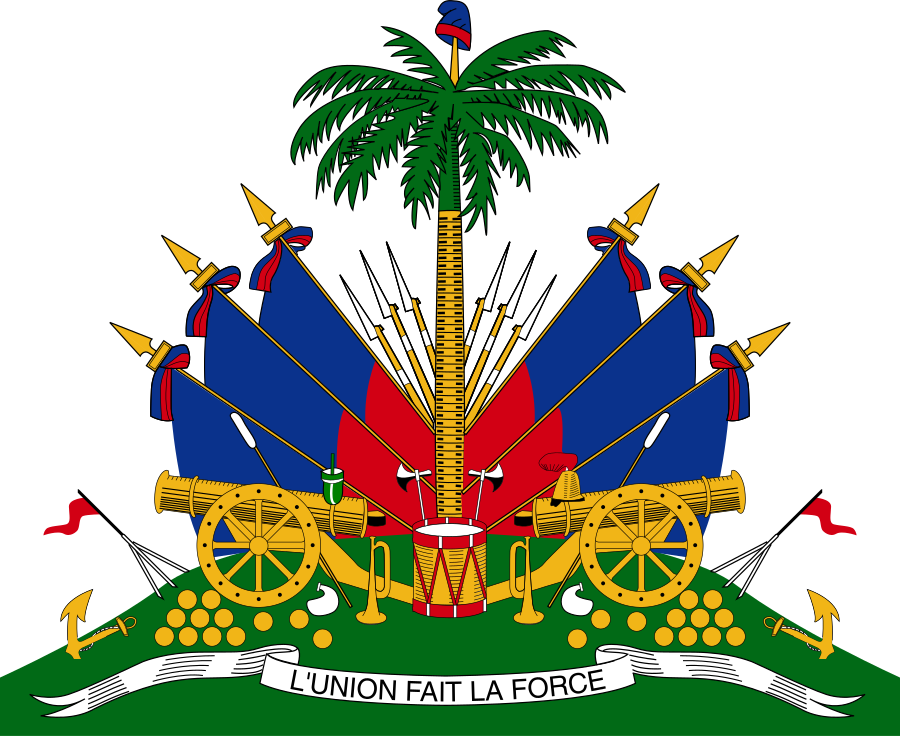
The Flag of Haiti
What is the Flag of Haiti?
The flag of Haiti is the national flag of the Republic of Haiti. It consists of two equal horizontal bands of blue and red with a centered white panel bearing the coat of arms. The coat of arms depicts a trophy of weapons atop a green hill, with the motto "L'Union Fait La Force" above it, meaning "Unity Makes Strength" in French.
What Does the Haiti Flag Look Like?
The flag of Haiti is composed of two horizontal bands, a blue band at the top and a red one at the bottom. In the center of the flag is a white panel that contains the country's coat of arms. The blue band of the flag stands for the freedom the country gained from slavery and independence of France, while the red band stands for the blood spilled during the struggle for independence. The white panel in the center contains the country's coat of arms, which is a trophy of weapons and a shield. The shield is divided into four sections, with each section containing two stars. The motto of the country, "L'Union Fait La Force", is placed above the coat of arms.
What is the Haiti Flag Called?
The Haiti flag is officially called the "Flag of the Republic of Haiti". It is also sometimes referred to as the "Flag of Liberty".
What Does the Haiti Flag Represent?
The Haiti flag represents the country's struggle for independence from slavery and from France. The blue band of the flag stands for the freedom the country gained, while the red band stands for the blood spilled during the struggle for independence. The white panel in the center contains the country's coat of arms, which is a trophy of weapons and a shield. The shield is divided into four sections, with each section containing two stars. The motto of the country, "L'Union Fait La Force", is placed above the coat of arms and translates to "Unity Makes Strength" in French. The flag of Haiti is a symbol of the country's resilience and courage in the face of adversity.
Who Created the Haitian Flag?
The Haitian flag was designed and created in 1803 by General Alexandre Petion. Petion was a wealthy landowner who served as the president of the Republic of Haiti from 1807 to 1818. He was one of the most influential figures in the Haitian Revolution and is considered the father of the Haitian nation.
The design of the flag is based on the French tricolor flag, with a combination of blue, red, and white. The blue stripe represents Haiti’s African heritage, while the red stripe symbolizes the blood shed in the struggle for independence from French colonial rule. The white symbolizes Haiti’s independence, as well as its European influence.
The current flag of Haiti was adopted in 1986, but the design has remained largely unchanged since it was first created in 1803. It is one of the oldest flags in the world and has been used to represent Haiti for over two centuries.
The flag is often seen as a symbol of hope and resilience, as it has endured through many periods of unrest and upheaval. It is also a reminder of Haiti’s hard-fought struggle for independence and the courage and determination of its people.
The Haitian flag has been adopted by many Haitians living abroad, and is often seen at Haitian parades and other cultural events. It is a reminder of the country’s rich heritage and its proud history of overcoming adversity.
General Petion’s design and creation of the Haitian flag is a lasting symbol of strength and unity, and of hope for the future of Haiti. It is a reminder of the courage and determination of the Haitian people and of the importance of freedom and self-determination.
Bordering Countries

Similar Flags
Flags that share colours with Haiti