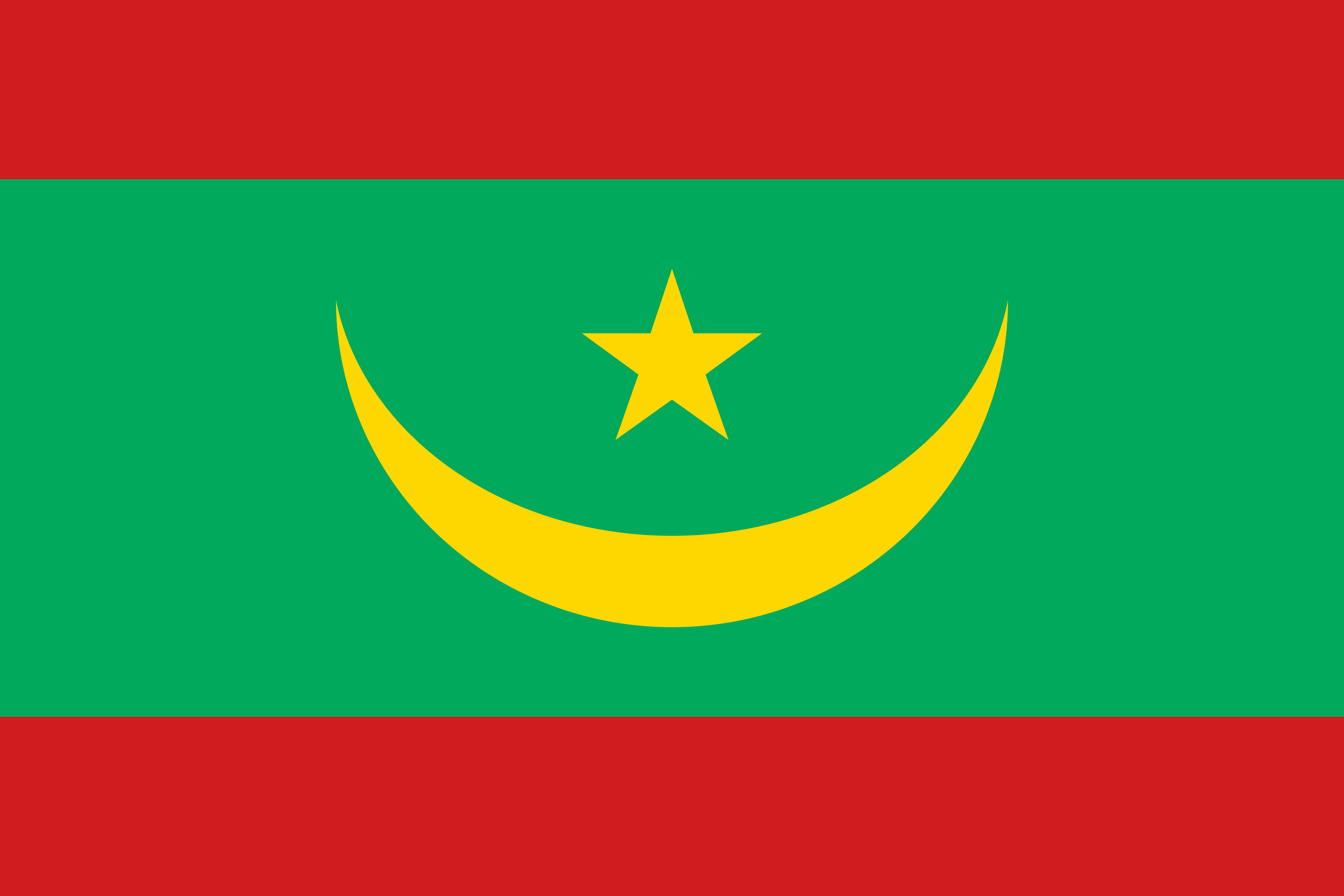
Gabon 🇬🇦
Gabonese Republic

The flag of Gabon is composed of three equal horizontal bands of green, yellow and blue.
Location
Quick Facts
Alpha 2
GAAlpha 3
GABNumber
266TLD
.gaCapital
LibrevillePopulation
2,225,728Area
267,668 km²Languages
Currencies
Drives on
RightWeek starts
MondayTimezones
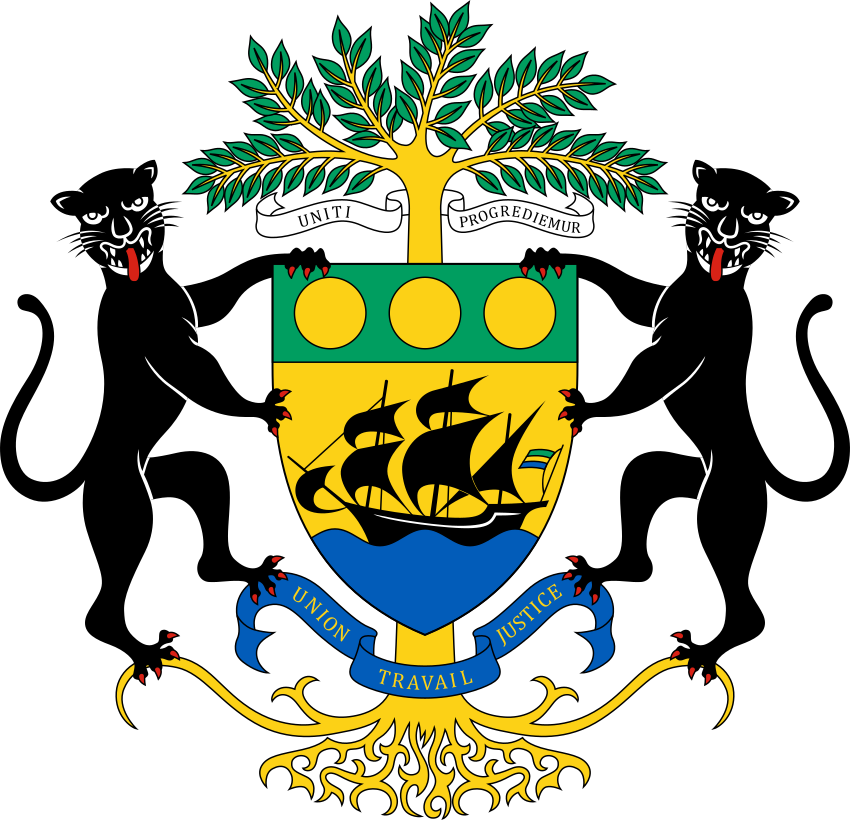
UTC+01:00Coat of Arms
What is the Flag of Gabon?
The flag of Gabon is a tricolor flag which is composed of three vertical bands in the colors of green, yellow and blue. This particular flag was adopted in 1960 and has remained unchanged since then.
What Does the Gabon Flag Look Like?
The Gabon flag has a green vertical band on the left side, a yellow band in the middle and a blue vertical band on the right side. The green band is wider than the other two and the yellow band is the thinnest. The flag of Gabon also features a yellow star in the middle of the yellow band.
What is the Gabon Flag Called?
The flag of Gabon is officially known as the “Tricolore Gabonais” or the Gabonese Tricolor. It is also sometimes referred to as the “Flag of the Republic” or the “Flag of Gabon”.
What Does the Gabon Flag Represent?
The colors of the Gabon flag have deep symbolism for the country and its people. The green color stands for the nation’s lush forests and its abundance of natural resources. The yellow color stands for the country’s prosperity and the blue color symbolizes the sea and sky. The yellow star in the center of the flag stands for unity and the ideals of a united nation.
Who Created the Gabonese Flag?
The official flag of Gabon was designed in 1960 by a Gabonese student, Louis Sylvester Ravy.
Ravy was born in 1939 in Libreville, Gabon and attended primary school in the city. After completing his primary school education, Ravy moved to Paris, France, in 1958 to pursue a higher education. While attending school in Paris, Ravy is said to have been inspired by the city’s vibrant colors and the French flag to design the flag of Gabon.
The flag of Gabon features three horizontal stripes in shades of green, yellow, and blue. The green stripe is at the top and bottom, with the yellow stripe in the center. The blue stripe is the largest of the three, and it is set in the center of the flag. The blue stripe spans the width of the flag, and is said to represent the country's lush forests and natural resources. The yellow stripe is symbolic of the country’s mineral wealth, while the green stripes represent the nation’s agricultural fertility.
The design of the flag is said to have been inspired by the French flag, which also features three horizontal stripes in shades of blue, white, and red. The similarities between the two flags may be attributed to the fact that Gabon was once a French colony, and that Ravy was living in Paris when he designed the Gabonese flag.
In addition to the colors of the flag, the design also features a yellow triangle in the center with a small yellow star in the center. The triangle is said to be a symbol of the nation’s unity, while the yellow star represents the nation’s hope for a brighter future.
The flag of Gabon was officially adopted in 1960, and has remained unchanged since then. It is a symbol of the nation’s pride and patriotism, and is used in official ceremonies and events. The flag is also used by the country’s athletes in international competitions.
The flag of Gabon was designed by Louis Sylvester Ravy, a student from Libreville, Gabon. Inspired by the colors of the French flag and the natural resources of the country, Ravy’s design has come to represent the pride and patriotism of the Gabonese nation.
Bordering Countries


Similar Flags
Flags that share colours with Gabon